"96% accurate" sounds close to perfect. On a one-hour recording of ordinary speech — roughly nine thousand words — it means about three hundred and sixty wrong words. Whether that is excellent or unusable depends entirely on what you are doing with the text.
That is the honest frame for this question. Accuracy is not one number, and the number moves a lot depending on the recording.
How word error rate is actually calculated
The standard metric is word error rate. It counts three kinds of mistake against a reference transcript and divides by how many words were actually spoken:
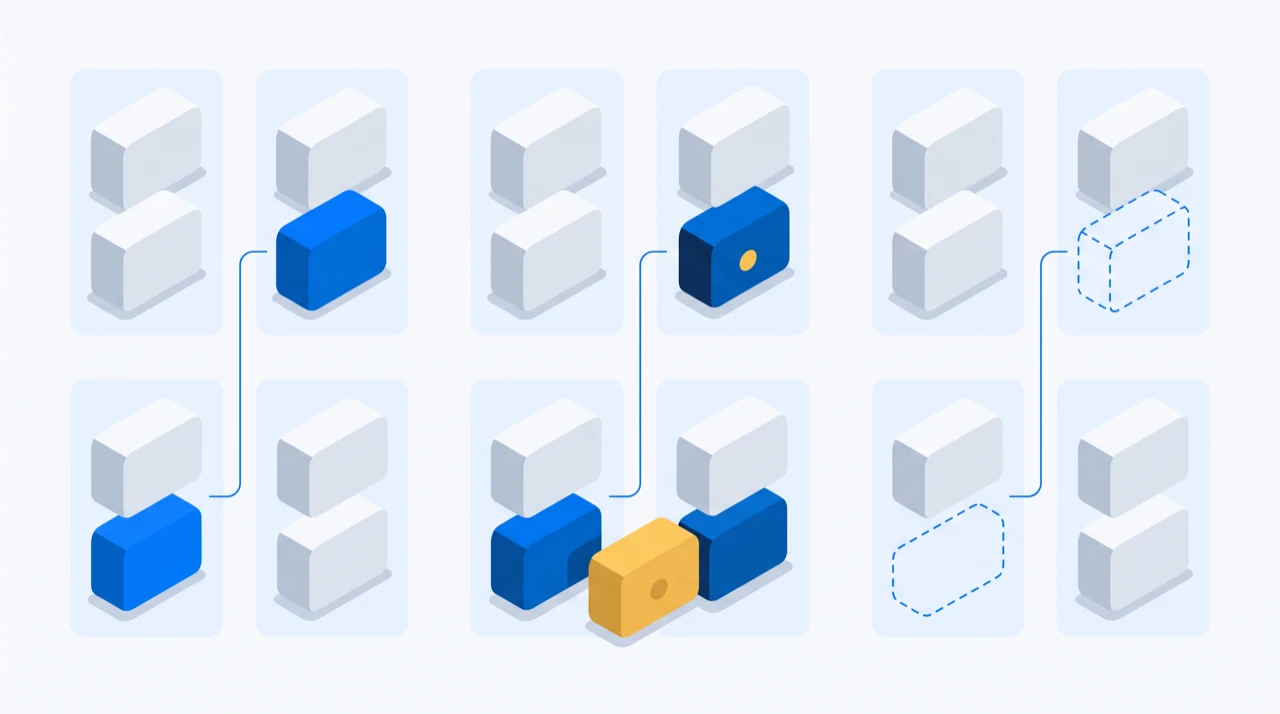
WER = (S + D + I) / N

S = substitutions   a wrong word in place of a right one
D = deletions       a spoken word that is missing
I = insertions      a word that was never said
N = words in the reference
A worked example. The reference is what was said; the hypothesis is what the model returned:
reference:   we rewrote the ingest pipeline twice last quarter
hypothesis:  we rewrote the ingest pipeline twice last quarter and
| Count | |
|---|---|
| Substitutions | 0 |
| Deletions | 0 |
| Insertions | 1 (and) |
| Reference words (N) | 8 |
| WER | 1 / 8 = 12.5% |
Accuracy figures are usually just the inverse: 12.5% WER, 87.5% accuracy.
Two things follow from the formula that the marketing number never mentions.
Every word counts the same. Missing "the" and missing a person's surname are both one error. Only one of them matters when you publish the quote.
It can exceed 100%. A model that hallucinates a trailing sentence adds insertions without any reference words to divide by, so WER above 100% is possible. Any metric that can do that is not a percentage in the everyday sense.
Why one number never tells you enough
The reference is a choice, not a fact
WER is measured against a transcript someone wrote by hand. That person decided whether "gonna" is one word or two, whether filler words count, whether numbers are digits or spelled out. Change those decisions and the same audio produces a different score for the same model. There is no objective transcript sitting underneath the audio waiting to be found.
The dataset decides the number
Published figures come from clean benchmark audio — read speech, single speaker, good microphone. Your recording is probably not that, which is why a tool quoting 96% can still hand you a rough transcript of a noisy call. The number is not dishonest; it is measured under conditions you did not reproduce.
Normalisation moves it several points
Before comparing, most evaluations strip punctuation, lowercase everything, and expand or collapse contractions. How aggressively you do that changes the score meaningfully. Two vendors quoting different numbers may be running the same model with different normalisation.
The practical consequence: published accuracy percentages are close to useless for choosing a tool. Five minutes of your own audio tells you more than any of them.
Confidence is not accuracy
Most speech systems can return a confidence score per word or segment. It is tempting to read it as "how likely this is right". It is not.
Confidence is the model's estimate of its own certainty, and speech models are frequently confident and wrong. Proper nouns are the clearest case: asked to choose between an unfamiliar surname and a common word that sounds like it, the model picks the common word and is confident about it, because the common word is what its training data says usually comes next.
Use confidence as a hint about where to look. Never use it as verification.
The failure mode is fluency, not garbage
This is the thing that catches people out. A bad transcript from twenty years ago was obviously bad — garbled, ungrammatical, visibly broken. A bad transcript from a modern model reads perfectly well and says something slightly different from what was said.
That is a direct consequence of how these models work: they are trained to produce likely text. When the audio is unclear, the fallback is not silence, it is a plausible sentence. Fluent output is not evidence of an accurate one, and proofreading for "does this read oddly" will not catch it. Only comparison against the audio will.
The five things that actually degrade a transcript
In rough order of how much damage they do:
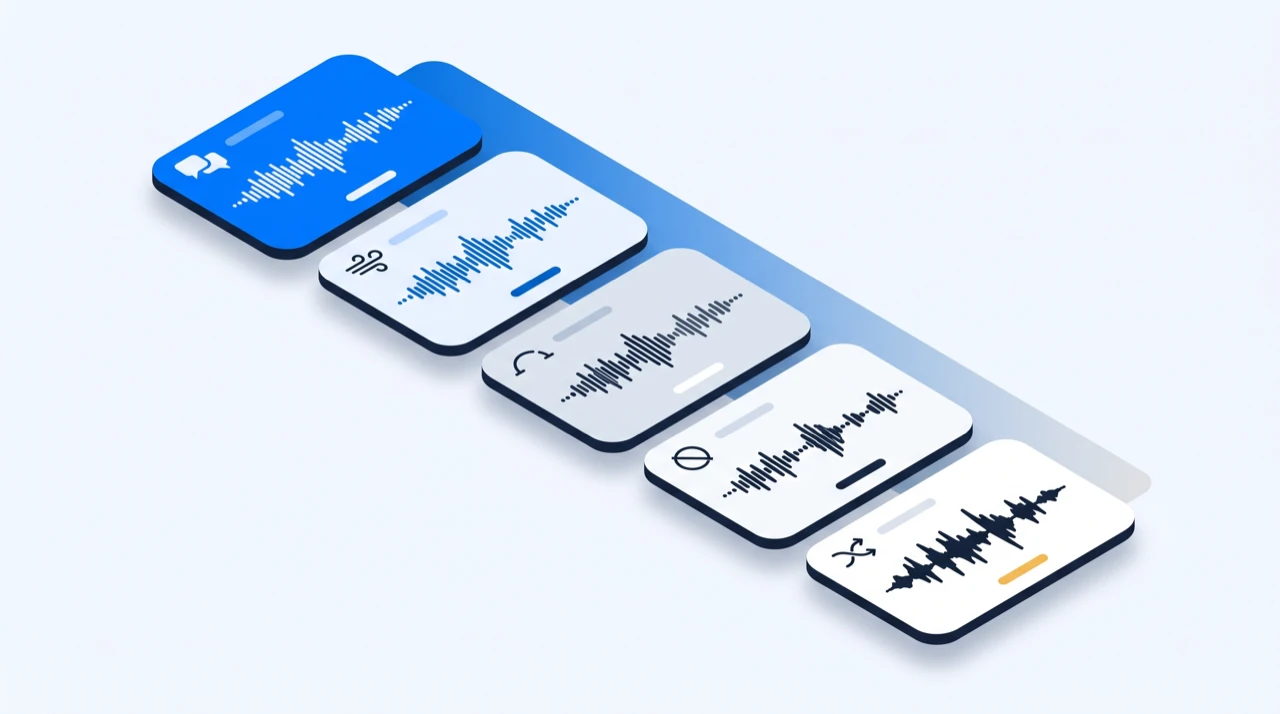
Overlapping speech
Two people talking at once is the hardest case. One speaker generally wins and the other is dropped or merged into nonsense. Panel discussions and lively interviews suffer most.
Background noise
Café ambience, air conditioning, traffic, keyboard clatter. Steady noise is handled better than intermittent noise — a constant hum is easier to work around than a door slamming mid-sentence.
Microphone distance
A lapel mic and a laptop mic across the room produce noticeably different results from the same speaker in the same room. This is usually the single cheapest thing to fix.
Accents and dialect
Accuracy varies across accents, and models are generally strongest on the varieties best represented in their training data. This is a real and documented limitation rather than something to talk around.
Specialist vocabulary
Medical, legal and technical terms, product names, and anything invented recently. The model has to guess at sounds it has little or no context for, so it substitutes a common word that sounds similar.
Notice what is not on the list: speaking speed, and recording length. Fast talkers transcribe fine, and a two-hour recording is not less accurate than a ten-minute one — it just contains more total errors because it contains more total words.
Where errors cluster
This is the practically useful part. Errors are not evenly scattered through a transcript; they concentrate in predictable places.
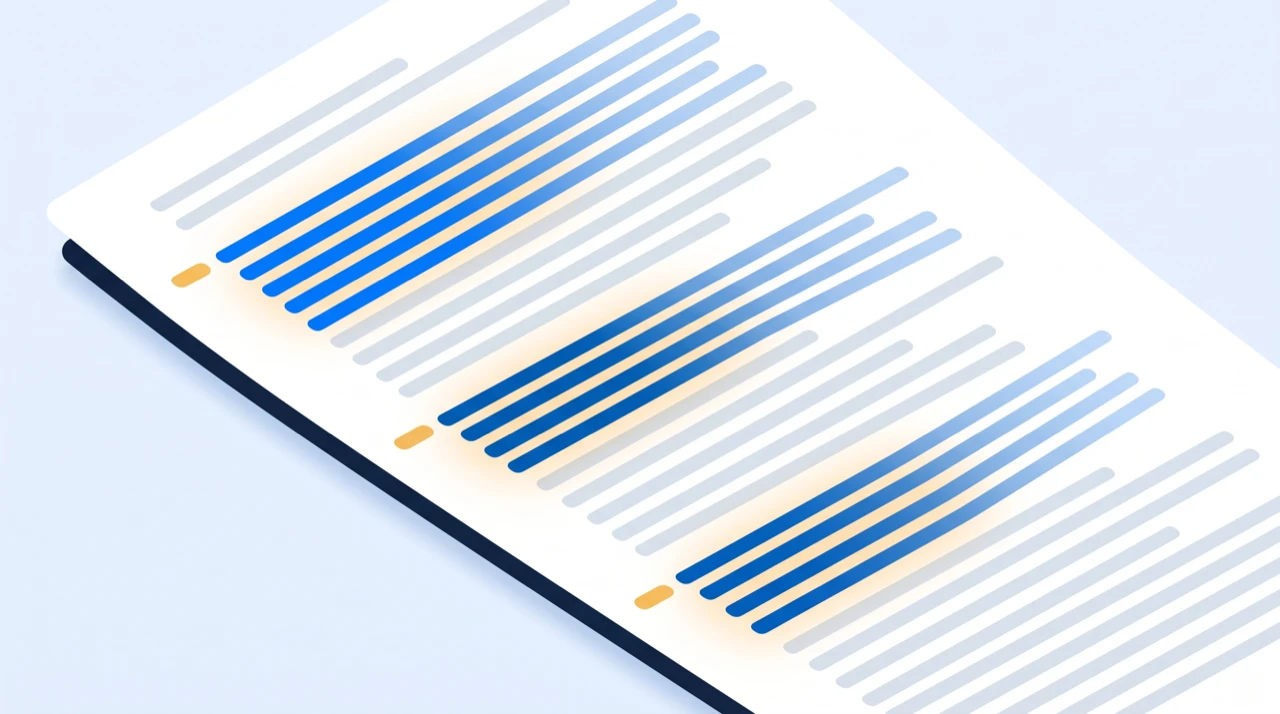
- Proper nouns, especially on first mention before any context exists
- Numbers, particularly when spoken quickly — "fifty" and "fifteen" are a classic pair
- The first and last few seconds of a recording, where levels are often still settling
- Anywhere two people overlap
If you are reviewing a transcript under time pressure, checking those four things catches most of what matters.
How to test accuracy on your own audio
This takes about fifteen minutes and is worth more than every published benchmark.
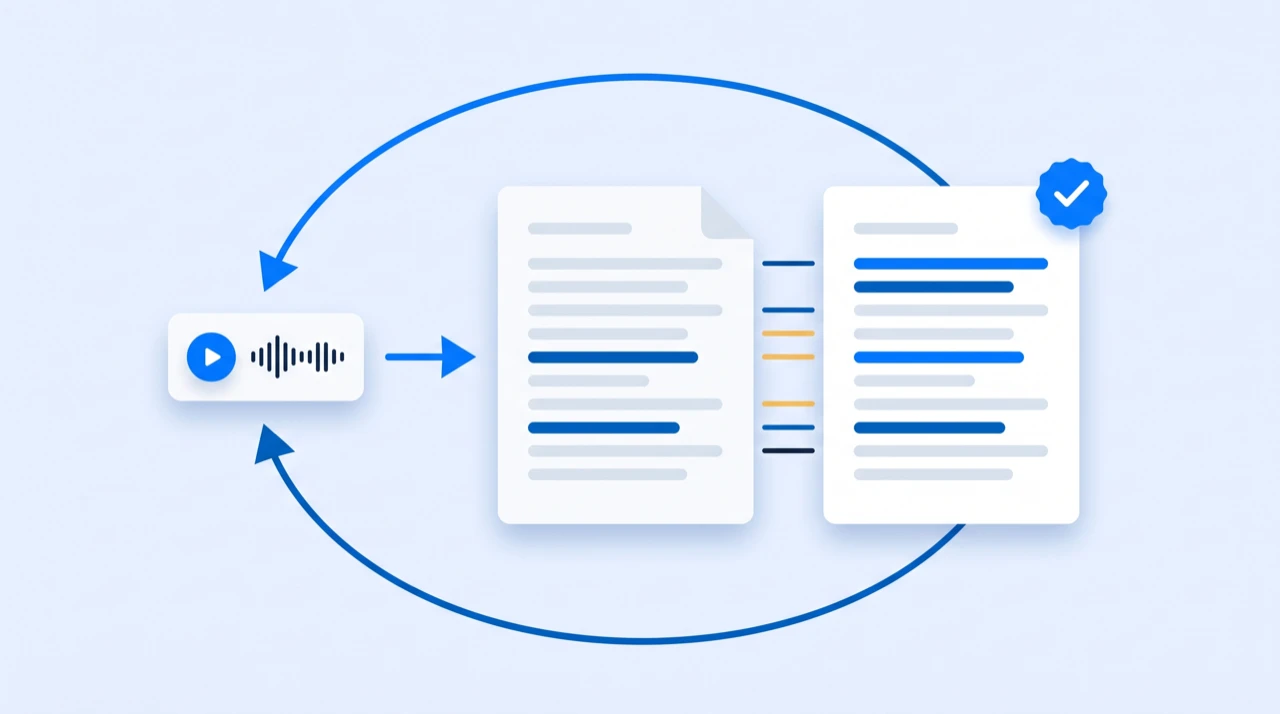
- Take five minutes of your worst-case audio. Not your cleanest sample — the recording you actually struggle with. A benchmark on easy audio tells you nothing you need to know.
- Transcribe it and print the result.
- Listen with the transcript in front of you and mark every substitution, deletion and insertion.
- Count the reference words and apply the formula above.
- Then ignore the number and read your marks. Are the errors on filler words, or on the three names you would have to fix in every published quote? That distribution matters more than the percentage.
Repeat with a second tool if you are comparing. Same audio, same reference, same normalisation — otherwise you are comparing two different measurements rather than two tools.
AI or a human?
The framing of "which is more accurate" is less useful than "which does this job need".
| The job | What it needs |
|---|---|
| Searching your own archive | AI alone. You are looking for a phrase you half-remember; a few wrong words do not stop you finding it |
| Show notes and summaries | AI plus a read-through. You are rewriting the content anyway, so errors get caught in the process |
| Published quotes | AI plus a check of those specific passages against the audio |
| Subtitles and captions | AI plus a review pass. Errors are visible to every viewer, and captions serve people who cannot hear the audio to correct against |
| Legal, medical, compliance | Human verification, regardless of what the accuracy figure says |
| Anything you will be held to | A human, reading the whole thing |
The useful pattern for most work is not one or the other. It is AI for the first draft — minutes instead of hours — and a person for the pass that makes it publishable.
Getting a better result
Most of the leverage is in the recording, not the transcription:
- Get the microphone closer to the speaker than feels necessary
- Record in the quietest room available, even an untreated one
- Ask people not to talk over each other — it helps the transcript and the listener equally
- If speakers are in different places, record separate tracks
And on the transcript side: fix recurring names early. A guest's surname appearing forty times means one correction pattern applied forty times, and spotting it in minute two saves you finding it in minute fifty-eight.
If a link fails outright rather than transcribing badly, that is a different problem — why a video URL fails to transcribe works through the causes.
What we use
EzScribe transcribes with Whisper large-v3-turbo, an open speech recognition model. Everything above applies to it: strong on clear conversational speech, weaker on overlap, noise and unfamiliar proper nouns, and variable across accents.
We do not publish an accuracy percentage for it, and you should be sceptical of anyone who does without saying which dataset, which reference and which normalisation produced the figure. What we do instead is keep the transcript editable in the browser before you export it — because no model gets all of it right, and the fastest place to fix an error is before it has been copied into three subtitle files.
Frequently asked questions
- What is a good word error rate for transcription?
- It depends entirely on the job, not on a universal threshold. Searching your own archive is fine at error rates that would be unacceptable in a published quote, and legal or medical records need human verification at any figure a model reports. The useful question is not "is this WER good" but "how much does an error in this particular sentence cost me".
- How is word error rate calculated?
- Add the substitutions, deletions and insertions the transcript makes against a reference, then divide by the number of words in the reference: WER = (S + D + I) / N. A hundred-word passage with three wrong words, one dropped and one invented has a WER of 5%, so 95% accuracy. Note it can exceed 100% — a system that inserts more words than were spoken will.
- Is AI transcription as accurate as a human?
- Not on hard audio, and the gap is widest exactly where it matters: overlapping speakers, heavy accents, poor microphones and specialist vocabulary. On clear conversational speech with a close microphone the difference is small enough that a read-through closes it. The practical answer is that AI produces a first draft in minutes and a human closes it, which is faster and cheaper than either alone for most work.
- Why do transcription tools all claim 99% accuracy?
- Because the figure is measured on clean benchmark audio — read speech, one speaker, a good microphone — and your recording is probably not that. The number is not usually dishonest; it is measured under conditions you did not reproduce. That is why testing on five minutes of your own audio tells you more than any published percentage.
- Does a high confidence score mean the transcript is correct?
- No. Confidence is the model's estimate of its own certainty, and speech models are often confidently wrong — particularly on proper nouns, where a familiar word that sounds similar scores higher than the unfamiliar name that was actually said. Treat low confidence as a hint about where to look, never treat high confidence as verification.
- What model does EzScribe use?
- Whisper large-v3-turbo, an open speech recognition model. Everything on this page applies to it: strong on clear conversational speech, weaker on overlap, noise and unfamiliar proper nouns, and variable across accents. The transcript stays editable in the browser before you export it precisely because no model gets all of it right.
Try it on a video of your own
Reading about it only gets you so far. Paste a link you are authorized to transcribe and look at the actual transcript — the words, the timings, and whatever the audio was going to trip on.
88 free credits when you sign up. Credits are pay-as-you-go with no subscription, and a job that fails is not charged.